
Granit er en type magmatisk bjergart, der udvindes for sin ekstreme styrke, densitet, holdbarhed og korrosionsbestandighed. Men granit er også meget alsidig – det er ikke kun til firkanter og rektangler! Faktisk arbejder vi regelmæssigt med granitkomponenter, der er fremstillet i former, vinkler og kurver i alle variationer – med fremragende resultater.
Takket være vores avancerede bearbejdning kan skæreflader blive exceptionelt plane. Disse egenskaber gør granit til det ideelle materiale til at skabe maskinbaser og målekomponenter i specialstørrelse og -design. Granit er:
■ maskinbearbejdelig
■ præcis flad når den er skåret og færdiggjort
■ rustbestandig
■ holdbar
■ langvarig
Granitkomponenter er også nemme at rengøre. Når du laver brugerdefinerede designs, skal du sørge for at vælge granit på grund af dets overlegne fordele.
STANDARDER / ANVENDELSER MED HØJ SLIDTAGE
Den granit, som ZHHIMG bruger til vores standard overfladepladeprodukter, har et højt kvartsindhold, hvilket giver større modstandsdygtighed over for slid og skader. Vores Superior Black-farver har lav vandabsorption, hvilket minimerer risikoen for, at dine præcisionsmålere ruster, når de monteres på pladerne. De granitfarver, som ZHHIMG tilbyder, resulterer i mindre genskin, hvilket betyder mindre øjenbelastning for personer, der bruger pladerne. Vi har valgt vores granittyper under hensyntagen til termisk udvidelse for at holde dette aspekt minimalt.
BRUGERDEFINEREDE APPLIKATIONER
Når din applikation kræver en plade med brugerdefinerede former, gevindindsatser, slidser eller anden bearbejdning, bør du vælge et materiale som Black Jinan Black. Dette naturlige materiale tilbyder overlegen stivhed, fremragende vibrationsdæmpning og forbedret bearbejdelighed.
Det er vigtigt at bemærke, at farve alene ikke er en indikation af stenens fysiske egenskaber. Generelt er granits farve direkte relateret til tilstedeværelsen eller fraværet af mineraler, hvilket muligvis ikke har nogen indflydelse på de egenskaber, der gør et godt overfladeplademateriale. Der findes lyserøde, grå og sorte granitter, der er fremragende til overfladeplader, samt sorte, grå og lyserøde granitter, der er fuldstændig uegnede til præcisionsapplikationer. De kritiske egenskaber ved granit, hvad angår dens anvendelse som overfladeplademateriale, har intet at gøre med farve og er som følger:
■ Stivhed (nedbøjning under belastning - angivet ved elasticitetsmodul)
■ Hårdhed
■ Tæthed
■ Slidstyrke
■ Stabilitet
■ Porøsitet
Vi har testet mange granitmaterialer og sammenlignet dem. Endelig er vi nået til det resultat, at Jinan sort granit er det bedste materiale, vi nogensinde har kendt. Indisk sort granit og sydafrikansk granit ligner Jinan sort granit, men deres fysiske egenskaber er ringere end Jinan sort granit. ZHHIMG vil fortsætte med at lede efter flere granitmaterialer i verden og sammenligne deres fysiske egenskaber.
For at tale mere om den rigtige granit til dit projekt, bedes du kontakte osinfo@zhhimg.com.
Forskellige producenter bruger forskellige standarder. Der findes mange standarder i verden.
DIN-standarden, ASME B89.3.7-2013 eller den føderale specifikation GGG-P-463c (granitoverfladeplader) og så videre som grundlag for deres specifikationer.
Og vi kan fremstille præcisionsinspektionsplader i granit i henhold til dine krav. Du er velkommen til at kontakte os, hvis du vil vide mere om flere standarder.
Planhed kan betragtes som alle punkter på overfladen, der er indeholdt i to parallelle planer, basisplanet og tagplanet. Målingen af afstanden mellem planerne er overfladens samlede planhed. Denne planhedsmåling har almindeligvis en tolerance og kan inkludere en karakterbetegnelse.
For eksempel er planhedstolerancerne for tre standardkvaliteter defineret i den føderale specifikation som bestemt af følgende formel:
■ Laboratoriekvalitet AA = (40 + diagonal i anden kvadrat/25) x 0,000001" (ensidig)
■ Inspektionsgrad A = Laboratoriegrad AA x 2
■ Værktøjsrumsklasse B = Laboratorieklasse AA x 4.
For overfladeplader i standardstørrelse garanterer vi planhedstolerancer, der overstiger kravene i denne specifikation. Ud over planhed behandler ASME B89.3.7-2013 og Federal Specification GGG-P-463c emner som: nøjagtighed af gentagne målinger, materialeegenskaber for overfladepladegraniter, overfladefinish, placering af støttepunkter, stivhed, acceptable inspektionsmetoder, installation af gevindindsatser osv.
ZHHIMG granitoverfladeplader og granitinspektionsplader opfylder eller overgår alle kravene i denne specifikation. Der er i øjeblikket ingen definerende specifikation for granitvinkelplader, paralleller eller masterkvadrater.
Og du kan finde formlerne for andre standarder iDOWNLOAD.
For det første er det vigtigt at holde pladen ren. Luftbårent slibestøv er normalt den største kilde til slid på en plade, da det har tendens til at sætte sig fast i emner og kontaktfladerne på måleinstrumenter. For det andet skal du dække din plade for at beskytte den mod støv og skader. Levetiden kan forlænges ved at dække pladen, når den ikke er i brug, ved at rotere pladen med jævne mellemrum, så et enkelt område ikke udsættes for overdreven brug, og ved at udskifte stålkontaktpuder på måleinstrumenter med hårdmetalpuder. Undgå også at placere mad eller sodavand på pladen. Bemærk, at mange sodavand indeholder enten kulsyre eller fosforsyre, som kan opløse de blødere mineraler og efterlade små huller i overfladen.
Dette afhænger af, hvordan tallerkenen bruges. Hvis det er muligt, anbefaler vi at rengøre tallerkenen i begyndelsen af dagen (eller arbejdsvagten) og igen i slutningen. Hvis tallerkenen bliver snavset, især med olieholdige eller klæbrige væsker, bør den sandsynligvis rengøres med det samme.
Rengør pladen regelmæssigt med flydende eller vandfri ZHHIMG overfladerens. Valget af rengøringsopløsninger er vigtigt. Hvis der anvendes et flygtigt opløsningsmiddel (acetone, lakfortynder, alkohol osv.), vil fordampningen afkøle overfladen og forvrænge den. I dette tilfælde er det nødvendigt at lade pladen normalisere sig, før den bruges, ellers vil der opstå målefejl.
Den tid, det tager for pladen at normalisere sig, varierer afhængigt af pladens størrelse og mængden af køling. En time burde være tilstrækkeligt for mindre plader. To timer kan være nødvendige for større plader. Hvis der anvendes et vandbaseret rengøringsmiddel, vil der også være en vis fordampningskøling.
Pladen vil også tilbageholde vandet, og dette kan forårsage rust på metaldele i kontakt med overfladen. Nogle rengøringsmidler vil også efterlade en klæbrig rest, når de tørrer, hvilket vil tiltrække luftbårent støv og faktisk øge sliddet i stedet for at mindske det.
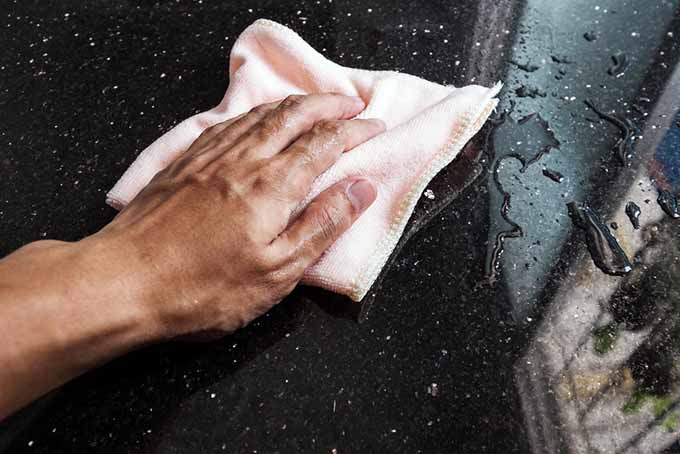
Dette afhænger af pladens brug og miljø. Vi anbefaler, at en ny plade eller præcisionsgranittilbehør gennemgår en fuldstændig rekalibrering inden for et år efter købet. Hvis granitoverfladepladen vil blive brugt flittig, kan det være tilrådeligt at forkorte dette interval til seks måneder. Månedlig inspektion for gentagne målefejl ved hjælp af et elektronisk vaterpas eller lignende enhed vil vise eventuelle slidpletter og tager kun et par minutter at udføre. Når resultaterne af den første rekalibrering er bestemt, kan kalibreringsintervallet forlænges eller forkortes efter tilladelse eller krav fra dit interne kvalitetssystem.
Vi kan tilbyde service til at hjælpe dig med at inspicere og kalibrere din granitoverflade.

Der er flere mulige årsager til variationer mellem kalibreringer:
- Overfladen blev vasket med en varm eller kold opløsning før kalibrering og fik ikke tilstrækkelig tid til at normalisere sig.
- Pladen er ikke korrekt understøttet
- Temperaturændring
- Kladder
- Direkte sollys eller anden strålevarme på pladens overflade. Sørg for, at loftsbelysning ikke opvarmer overfladen.
- Variationer i den vertikale temperaturgradient mellem vinter og sommer (Hvis det er muligt, skal den vertikale gradienttemperatur kendes på det tidspunkt, hvor kalibreringen udføres.)
- Pladen fik ikke tilstrækkelig tid til at normalisere sig efter forsendelse
- Forkert brug af inspektionsudstyr eller brug af ikke-kalibreret udstyr
- Overfladeændring som følge af slid
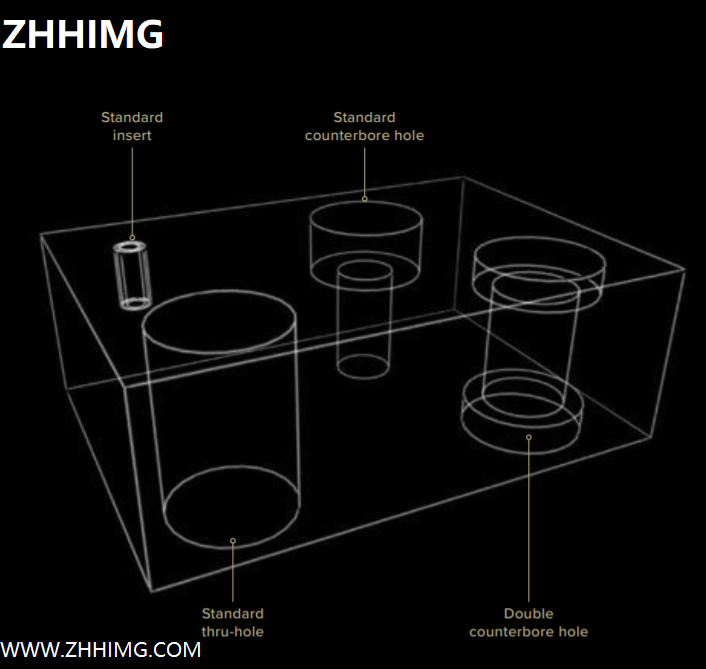
Hvor mange slags huller på præcisionsgranit?
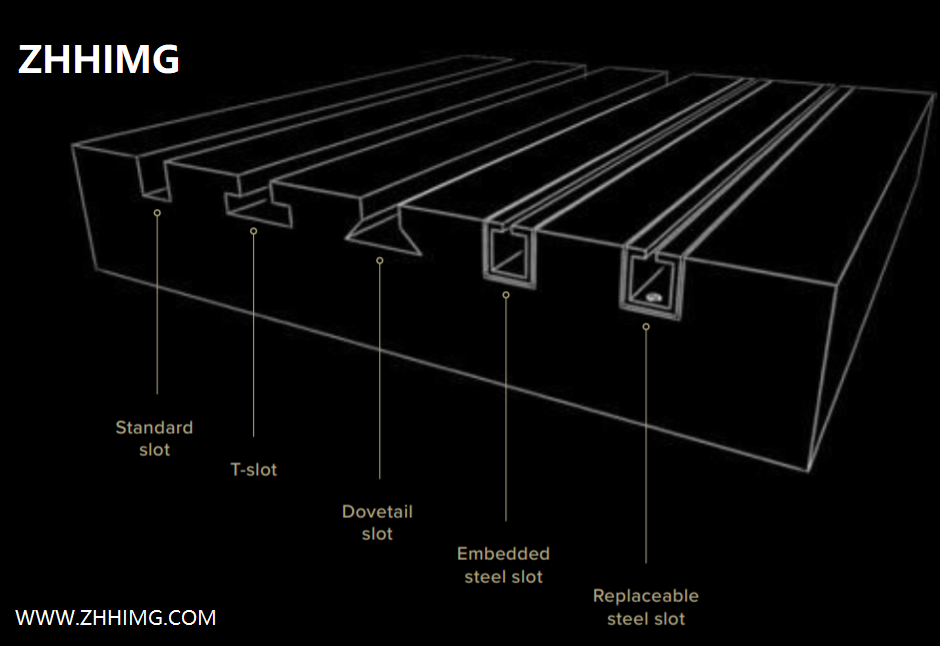
Slots på præcisionsgranitkomponenter
For mange fabrikker, inspektionsrum og laboratorier anvendes præcisionsplader af granit som grundlag for nøjagtig måling. Fordi enhver lineær måling afhænger af en nøjagtig referenceoverflade, hvorfra de endelige dimensioner tages, giver overfladeplader det bedste referenceplan til arbejdsinspektion og layout før bearbejdning. De er også ideelle grundlag for at foretage højdemålinger og måle overflader. Ydermere gør en høj grad af fladhed, stabilitet, generel kvalitet og udførelse dem til et godt valg til montering af sofistikerede mekaniske, elektroniske og optiske målesystemer. For alle disse måleprocesser er det bydende nødvendigt at holde overfladepladerne kalibrerede.
Gentag målinger og fladhed
Både planhed og gentagne målinger er afgørende for at sikre en præcis overflade. Planhed kan betragtes som alle punkter på overfladen, der er indeholdt i to parallelle planer, basisplanet og tagplanet. Målingen af afstanden mellem planerne er overfladens samlede planhed. Denne planhedmåling har normalt en tolerance og kan inkludere en karakterbetegnelse.
Planhedstolerancerne for tre standardkvaliteter er defineret i den føderale specifikation som bestemt af følgende formel:
DIN-standard, GB-standard, ASME-standard, JJS-standard ... forskellige lande med forskellige standarter ...
Ud over planhed skal repeterbarhed sikres. En gentagen måling er en måling af lokale planhedsområder. Det er en måling, der tages et sted på overfladen af en plade, og som vil gentage sig inden for den angivne tolerance. Ved at kontrollere den lokale planhed til en snævrere tolerance end den samlede planhed garanteres en gradvis ændring i overfladens planhedsprofil, hvorved lokale fejl minimeres.
For at sikre, at en overfladeplade opfylder både specifikationerne for planhed og gentagne målinger, bør producenter af granitoverfladeplader bruge den føderale specifikation GGG-P-463c som grundlag for deres specifikationer. Denne standard omhandler nøjagtighed af gentagne målinger, materialeegenskaber for granitoverfladeplader, overfladefinish, placering af støttepunkter, stivhed, acceptable inspektionsmetoder og installation af gevindindsatser.
Kontrol af pladens nøjagtighed
Ved at følge et par enkle retningslinjer bør en investering i en granitoverfladeplade holde i mange år. Afhængigt af pladens brug, værkstedsmiljøet og den nødvendige nøjagtighed varierer hyppigheden af kontrol af overfladepladens nøjagtighed. En generel tommelfingerregel er, at en ny plade skal gennemgå en fuld rekalibrering inden for et år efter købet. Hvis pladen bruges ofte, anbefales det at forkorte dette interval til seks måneder.
Før en overfladeplade er slidt ud over specifikationen for generel planhed, vil den vise slidte eller bølgede stifter. Månedlig inspektion for gentagne målefejl ved hjælp af en gentagende aflæsningsmåler vil identificere slidpunkter. En gentagende aflæsningsmåler er et højpræcisionsinstrument, der registrerer lokale fejl og kan vises på en elektronisk forstærker med høj forstørrelse.
Et effektivt inspektionsprogram bør omfatte regelmæssige kontroller med en autokollimator, der giver faktisk kalibrering af den samlede planhed, som kan spores tilbage til National Institute of Standards and Technology (NIST). Omfattende kalibrering foretaget af producenten eller et uafhængigt firma er nødvendig fra tid til anden.
Variationer mellem kalibreringer
I nogle tilfælde er der variationer mellem kalibreringer af overfladeplader. Nogle gange kan faktorer som overfladeændringer som følge af slid, forkert brug af inspektionsudstyr eller brug af ikke-kalibreret udstyr forklare disse variationer. De to mest almindelige faktorer er dog temperatur og understøtning.
En af de vigtigste variabler er temperaturen. For eksempel kan overfladen være blevet vasket med en varm eller kold opløsning før kalibrering og ikke have fået tilstrækkelig tid til at normalisere sig. Andre årsager til temperaturændringer inkluderer træk af kold eller varm luft, direkte sollys, loftsbelysning eller andre kilder til strålevarme på pladens overflade.
Der kan også være variationer i den vertikale temperaturgradient mellem vinter og sommer. I nogle tilfælde får pladen ikke tilstrækkelig tid til at normalisere sig efter forsendelse. Det er en god idé at registrere den vertikale gradienttemperatur, når kalibreringen udføres.
En anden almindelig årsag til kalibreringsvariationer er en plade, der er forkert understøttet. En overfladeplade bør understøttes på tre punkter, ideelt set placeret 20% af længden ind fra pladens ender. To understøtninger bør placeres 20% af bredden ind fra de lange sider, og den resterende understøtning bør være centreret.
Kun tre punkter kan hvile solidt på andet end en præcisionsoverflade. Forsøg på at understøtte pladen på mere end tre punkter vil medføre, at pladen modtager sin støtte fra forskellige kombinationer af tre punkter, som ikke vil være de samme tre punkter, som den blev understøttet på under produktionen. Dette vil medføre fejl, da pladen bøjer sig for at tilpasse sig den nye støtteanordning. Overvej at bruge stålstativer med støttebjælker, der er designet til at flugte med de korrekte støttepunkter. Stativer til dette formål er generelt tilgængelige fra producenten af overfladepladen.
Hvis pladen er korrekt understøttet, er præcis nivellering kun nødvendig, hvis en anvendelse specificerer det. Nivellering er ikke nødvendig for at opretholde nøjagtigheden af en korrekt understøttet plade.
Forlæng pladens levetid
Ved at følge et par retningslinjer vil du reducere slid på en granitoverflade og i sidste ende forlænge dens levetid.
For det første er det vigtigt at holde pladen ren. Luftbårent slibestøv er normalt den største kilde til slid på en plade, da det har tendens til at sætte sig fast i emner og kontaktfladerne på målere.
Det er også vigtigt at dække pladerne for at beskytte dem mod støv og skader. Levetiden kan forlænges ved at dække pladen til, når den ikke er i brug.
Drej pladen med jævne mellemrum, så et enkelt område ikke udsættes for overdreven brug. Det anbefales også at udskifte stålkontaktpuder på måleinstrumenter med hårdmetalkontaktpuder.
Undgå at sætte mad eller sodavand på tallerkenen. Mange sodavand indeholder enten kulsyre eller fosforsyre, som kan opløse de blødere mineraler og efterlade små huller i overfladen.
Hvor man skal tilbagefalde
Når en granitplade skal slibes, bør man overveje, om denne service skal udføres på stedet eller på et kalibreringsanlæg. Det er altid at foretrække at få pladen slibet på fabrikken eller et dedikeret anlæg. Hvis pladen dog ikke er for slidt, generelt inden for 0,001 tommer af den krævede tolerance, kan den slibes på stedet. Hvis en plade er slidt til et punkt, hvor den er mere end 0,001 tommer uden for tolerancen, eller hvis den er stærkt grubet eller hakket, skal den sendes til fabrikken til slibning inden slibes igen.
Et kalibreringsanlæg har det udstyr og de fabriksindstillinger, der giver de optimale betingelser for korrekt pladekalibrering og om nødvendigt efterbearbejdning.
Der skal udvises stor omhu ved valg af en tekniker til kalibrering og overfladebehandling på stedet. Bed om akkreditering, og verificer, at det udstyr, som teknikeren vil bruge, har en sporbar kalibrering. Erfaring er også en vigtig faktor, da det tager mange år at lære, hvordan man korrekt sliber præcisionsgranit.
Kritiske målinger starter med en præcisions granitoverfladeplade som basislinje. Ved at sikre en pålidelig reference ved hjælp af en korrekt kalibreret overfladeplade har producenterne et af de vigtigste værktøjer til pålidelige målinger og dele af bedre kvalitet.Q
Tjekliste for kalibreringsvariationer
1. Overfladen blev vasket med en varm eller kold opløsning før kalibrering og fik ikke tilstrækkelig tid til at normalisere sig.
2. Pladen er ikke korrekt understøttet.
3. Temperaturændring.
4. Udkast.
5. Direkte sollys eller anden strålevarme på pladens overflade. Sørg for, at loftsbelysning ikke opvarmer overfladen.
6. Variationer i den vertikale temperaturgradient mellem vinter og sommer. Hvis det overhovedet er muligt, skal den vertikale gradienttemperatur kendes på det tidspunkt, hvor kalibreringen udføres.
7. Pladen har ikke haft tilstrækkelig tid til at normalisere sig efter forsendelse.
8. Forkert brug af inspektionsudstyr eller brug af ikke-kalibreret udstyr.
9. Overfladeændring som følge af slid.
Tekniske tips
- Fordi hver lineær måling afhænger af en nøjagtig referenceoverflade, hvorfra de endelige dimensioner tages, giver overfladeplader det bedste referenceplan til arbejdsinspektion og layout før bearbejdning.
- Ved at kontrollere den lokale planhed til en snævrere tolerance end den samlede planhed, garanteres en gradvis ændring i overfladens planhedsprofil, hvorved lokale fejl minimeres.
- Et effektivt inspektionsprogram bør omfatte regelmæssige kontroller med en autokollimator, der giver en faktisk kalibrering af den samlede planhed, der kan spores tilbage til den nationale inspektionsmyndighed.
Blandt de mineralpartikler, der udgør granit, er mere end 90% feldspat og kvarts, hvoraf feldspat er den største mængde. Feldspat er ofte hvid, grå og kødrød, og kvarts er for det meste farveløs eller gråhvid, hvilket udgør granittens grundfarve. Feldspat og kvarts er hårde mineraler, og det er vanskeligt at bevæge dem med en stålkniv. Hvad angår de mørke pletter i granitten, primært sort glimmer, er der også nogle andre mineraler. Selvom biotit er relativt blød, er dens evne til at modstå stress ikke svag, og samtidig findes der en lille mængde i granit, ofte mindre end 10%. Det er i denne materialetilstand, at granit er særligt stærk.
En anden grund til, at granit er stærk, er, at dens mineralpartikler er tæt bundet til hinanden og indlejret i hinanden. Porerne udgør ofte mindre end 1% af klippens samlede volumen. Dette giver granitten evnen til at modstå stærke tryk og trænger ikke let ind af fugt.
Granitkomponenter er lavet af sten uden rust, syre og alkali, god slidstyrke og lang levetid, ingen særlig vedligeholdelse. Granitpræcisionskomponenter bruges mest i værktøjsfremstilling i maskinindustrien. Derfor kaldes de granitpræcisionskomponenter eller granitkomponenter. Egenskaberne ved granitpræcisionskomponenter er grundlæggende de samme som for granitplatforme. Introduktion til værktøjsfremstilling og måling af granitpræcisionskomponenter: Præcisionsbearbejdning og mikrobearbejdningsteknologi er vigtige udviklingsretninger inden for maskinindustrien, og de er blevet en vigtig indikator for at måle et højteknologisk niveau. Udviklingen af banebrydende teknologi og forsvarsindustrien er uadskillelig fra præcisionsbearbejdning og mikrobearbejdningsteknologi. Granitkomponenter kan glide glat under målingen uden stagnation. Måling af arbejdsfladen, generelle ridser påvirker ikke målenøjagtigheden. Granitkomponenter skal designes og produceres i henhold til efterspørgselssidens krav.
Anvendelsesfelt:
Som vi alle ved, vælger flere og flere maskiner og udstyr præcisionskomponenter i granit.
Granitkomponenter bruges til dynamisk bevægelse, lineære motorer, CMM, CNC, lasermaskiner...
velkommen til at kontakte os for mere information.
Granitmåleinstrumenter og mekaniske komponenter i granit er lavet af Jinan Black-granit af høj kvalitet. På grund af deres høje præcision, lange holdbarhed, gode stabilitet og korrosionsbestandighed er de blevet mere og mere anvendt i produktinspektion i den moderne industri og inden for videnskabelige områder som mekanisk, luftfart og videnskabelig forskning.
Fordele
----Dobbelt så hårdt som støbejern;
----Minimale dimensionsændringer skyldes temperaturændringer;
----Fri for vridning, så der ikke er afbrydelse af arbejdet;
----Fri for grater eller fremspring på grund af den fine kornstruktur og ubetydelig klæbning, hvilket sikrer en høj grad af fladhed over en lang levetid og ikke forårsager skader på andre dele eller instrumenter;
----Problemfri drift til brug med magnetiske materialer;
----Lang levetid og rustfri, hvilket resulterer i lave vedligeholdelsesomkostninger.
Præcisionsgranitoverfladepladerne er præcisionsslebet til en høj standard for planhed for at opnå nøjagtighed og bruges som base for montering af sofistikerede mekaniske, elektroniske og optiske målesystemer.
Nogle af de unikke egenskaber ved granitoverfladen:
Ensartethed i hårdhed;
Nøjagtige forhold under belastning;
Vibrationsabsorberende;
Let at rengøre;
Indpakningsbestandig;
Lav porøsitet;
Ikke-slibende;
Ikke-magnetisk
Fordele ved granitoverfladeplade
For det første forsvinder stenens struktur efter en lang periode med naturlig ældning ensartet, koefficientminimum og indre spændinger fuldstændigt, deformeres ikke, så præcisionen er høj.
For det andet vil der ikke være ridser, ikke under konstante temperaturforhold, ved stuetemperatur kan det også opretholde nøjagtigheden af temperaturmålingen.
For det tredje, ikke magnetisering, måling kan være jævn bevægelse, ingen knirkende fornemmelse, ikke påvirket af fugt, flyet er fast.
For det fjerde er stivheden god, hårdheden er høj, og slidstyrken er stærk.
Fem, ikke bange for syre, alkalisk væskeerosion, vil ikke ruste, behøver ikke at male olie, ikke let at klæbe mikrostøv, vedligeholdelse, nem at vedligeholde, lang levetid.
Hvorfor vælge en granitbase i stedet for en støbejerns maskinbund?
1. En maskinbase af granit kan opretholde en højere præcision end en maskinbase af støbejern. Maskinbasen af støbejern påvirkes let af temperatur og fugtighed, men det gør en maskinbase af granit ikke.
2. Med samme størrelse på granitmaskinbasen og støbejernsbasen er granitmaskinbasen mere omkostningseffektiv end støbejern;
3. En speciel maskinbase af granit er lettere at efterbehandle end en maskinbase af støbejern.
Granitoverfladeplader er nøgleinstrumenter i inspektionslaboratorier over hele landet. Den kalibrerede, ekstremt flade overflade på en overfladeplade gør det muligt for inspektører at bruge dem som basis for delinspektioner og instrumentkalibrering. Uden den stabilitet, som overfladeplader giver, ville mange af de snævert tolererede dele inden for forskellige teknologiske og medicinske områder være meget vanskeligere, hvis ikke umulige, at fremstille korrekt. For at bruge en granitoverfladeblok til at kalibrere og inspicere andre materialer og værktøjer skal granittens nøjagtighed naturligvis vurderes. Brugere kan kalibrere en granitoverfladeplade for at sikre dens nøjagtighed.
Rengør granitoverfladen før kalibrering. Hæld en lille mængde overfladepladerens på en ren, blød klud, og tør granittens overflade af. Tør straks rengøringsmidlet af overfladepladen med en tør klud. Lad ikke rengøringsvæsken lufttørre.
Placer en gentagende målemåler på midten af granitoverfladepladen.
Nulstil gentagelsesmåleren til overfladen af granitpladen.
Bevæg måleren langsomt hen over granittens overflade. Hold øje med målerens indikator, og registrer toppene af eventuelle højdevariationer, mens du bevæger instrumentet hen over pladen.
Sammenlign variationen i planhed på tværs af pladens overflade med tolerancerne for din overfladeplade, som varierer afhængigt af pladens størrelse og granitens planhed. Se den føderale specifikation GGG-P-463c (se Ressourcer) for at afgøre, om din plade opfylder planhedskravene for dens størrelse og kvalitet. Variationen mellem det højeste punkt på pladen og det laveste punkt på pladen er dens planhedsmål.
Kontroller, at de største dybdevariationer på pladens overflade falder inden for repeterbarhedsspecifikationerne for en plade af den størrelse og kvalitet. Se den føderale specifikation GGG-P-463c (se Ressourcer) for at afgøre, om din plade opfylder repeterbarhedskravene for dens størrelse. Kassér overfladepladen, hvis selv et enkelt punkt ikke opfylder repeterbarhedskravene.
Stop med at bruge en granitplade, der ikke opfylder de føderale krav. Returner pladen til producenten eller til et granitbelægningsfirma for at få blokken poleret igen, så den opfylder specifikationerne.
Tip
Udfør formelle kalibreringer mindst én gang om året, selvom granitplader, der bruges flittig, bør kalibreres oftere.
Formel, registrerbar kalibrering i produktions- eller inspektionsmiljøer udføres ofte af kvalitetssikring eller en ekstern leverandør af kalibreringstjenester, selvom alle kan bruge en gentagende måleenhed til uformelt at kontrollere en overfladeplade før brug.
Den tidlige historie af granitoverfladeplader
Før Anden Verdenskrig brugte producenter stålplader til dimensionsinspektion af dele. Under Anden Verdenskrig steg behovet for stål dramatisk, og mange stålplader blev smeltet om. En udskiftning var nødvendig, og granit blev det foretrukne materiale på grund af dets overlegne metrologiske egenskaber.
Flere fordele ved granit i forhold til stål blev tydelige. Granit er hårdere, men mere sprødt og udsat for afskalning. Man kan slibe granit til en meget større planhed og hurtigere end stål. Granit har også den ønskelige egenskab med en lavere termisk udvidelse sammenlignet med stål. Ydermere, hvis en stålplade skulle repareres, skulle den skrabes i hånden af håndværkere, der også anvendte deres færdigheder i genopbygning af maskinværktøj.
Som en sidebemærkning er nogle stålplader stadig i brug i dag.
Metrologiske egenskaber ved granitplader
Granit er en magmatisk bjergart dannet ved vulkanudbrud. Til sammenligning er marmor metamorfiseret kalksten. Til metrologisk brug skal den valgte granit opfylde specifikke krav, der er beskrevet i den føderale specifikation GGG-P-463c, herefter kaldet Fed Specs, og specifikt del 3.1 3.1. Blandt Fed Specs skal granit have en fin til mellemkornet tekstur.
Granit er et hårdt materiale, men dets hårdhed varierer af flere årsager. En erfaren granitpladetekniker kan vurdere hårdheden ud fra dets farve, som er en indikation af dets kvartsindhold. Granithårdhed er en egenskab, der delvist defineres af mængden af kvartsindhold og mangel på glimmer. De røde og lyserøde granitter har en tendens til at være de hårdeste, de grå har en medium hårdhed, og de sorte er de blødeste.
Youngs elasticitetsmodul bruges til at udtrykke stenens fleksibilitet eller hårdhed. Lyserød granit har i gennemsnit 3-5 point på skalaen, grå 5-7 point og sort 7-10 point. Jo mindre tallet er, desto hårdere er granitten typisk. Jo større tallet er, desto blødere og mere fleksibel er granitten. Det er vigtigt at kende granittens hårdhed, når man vælger en tykkelse, der kræves for tolerancegrader, og vægten af dele og målere, der placeres på den.
I gamle dage, hvor der var rigtige maskinarbejdere, kendt på deres trigonometriske hæfter i skjortelommerne, blev sort granit betragtet som "den bedste". Den bedste blev defineret som den type, der gav mest modstand mod slid eller er hårdere. En ulempe er, at de hårdere granitter har tendens til at skalle eller bukke lettere. Maskinarbejdere var så overbeviste om, at sort granit var den bedste, at nogle producenter af lyserød granit farvede den sort.
Jeg har personligt været vidne til en plade, der blev tabt af en gaffeltruck, da den blev flyttet fra opbevaring. Pladen ramte gulvet og delte sig i to, hvilket afslørede den sande lyserøde farve. Vær forsigtig, hvis du planlægger at købe sort granit fra Kina. Vi anbefaler, at du spilder dine penge på andre måder. En granitplade kan variere i hårdhed. En stribe kvarts kan være meget hårdere end resten af overfladepladen. Et lag sort gabbro kan gøre et område meget blødere. En veluddannet og erfaren reparationstekniker til overfladeplader ved, hvordan man håndterer disse bløde områder.
Overfladepladekvaliteter
Der findes fire kvaliteter af overfladeplader. Laboratoriekvalitet AA og A, ruminspektionskvalitet B, og den fjerde er værkstedskvalitet. Kvaliteterne AA og A er de mest flade med en planhedstolerance bedre end 0,00001 tommer for en AA-kvalitetsplade. Værkstedskvaliteter er de mindst flade, og som navnet antyder, er de beregnet til brug i værktøjsrum. Hvorimod kvalitet AA, kvalitet A og kvalitet B er beregnet til brug i et inspektions- eller kvalitetskontrollaboratorium.
PRoper-testning til kalibrering af overfladeplader
Jeg har altid fortalt mine kunder, at jeg kan hive enhver 10-årig ud af min kirke og lære dem på bare et par dage, hvordan man tester en tallerken. Det er ikke svært. Det kræver en vis teknik at udføre opgaven hurtigt, teknikker man lærer gennem tid og megen gentagelse. Jeg bør informere dig om, og jeg kan ikke understrege nok, at Fed Spec GGG-P-463c IKKE ER en kalibreringsprocedure! Mere om det senere.
Kalibrering af den samlede planhed (gennemsnitsrude) og repeterbarhedskontrol (lokaliseret slid) er et must ifølge Fed-specifikationerne. Den eneste undtagelse fra dette er med små plader, hvor repeterbarhed kun er påkrævet.
Lige så kritisk som de andre tests er testen for termiske gradienter. (Se Delta T nedenfor)
Figur 1
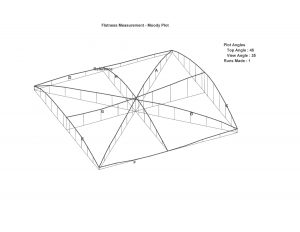
Planhedsprøvning har 4 godkendte metoder. Elektroniske vaterpas, autokollimering, laser og en enhed kendt som en planplacerer. Vi bruger kun elektroniske vaterpas, fordi de er den mest præcise og hurtigste metode af flere årsager.
Lasere og autokollimatorer bruger en meget lige lysstråle som reference. Man foretager en retlinjemåling af en granitoverfladeplade ved at sammenligne variationen i afstanden mellem overfladepladen og lysstrålen. Ved at tage en lige lysstråle og ramme den på et reflektormål, mens reflektormålet bevæges ned ad overfladepladen, er afstanden mellem den udsendte stråle og returstrålen en retlinjemåling.
Her er problemet med denne metode. Målet og kilden påvirkes af vibrationer, omgivelsestemperatur, et mål, der ikke er fladt eller ridset, forurening i luften og luftbevægelse (strømme). Alle disse bidrager til yderligere fejlfaktorer. Desuden er bidraget fra operatørfejl fra kontroller med en autokollimator større.
En erfaren autokollimatorbruger kan foretage meget nøjagtige målinger, men har stadig problemer med konsistensen af aflæsningerne, især over længere afstande, da refleksionerne har tendens til at blive bredere eller en smule slørede. Derudover giver et ikke helt fladt mål og en lang dags kikkeri gennem linsen yderligere fejl.
En planplaceringsenhed er simpelthen fjollet. Denne enhed bruger en nogenlunde lige (sammenlignet med en ekstremt lige kollimeret lysstråle eller laserstråle) som reference. Ikke alene bruger den mekaniske enhed en indikator, der normalt kun har en opløsning på 20 u-tommer, men stangens ujævnhed og forskellige materialer bidrager betydeligt til målefejl. Efter vores mening ville intet kompetent laboratorium nogensinde bruge en planplaceringsenhed som et instrument til den endelige inspektion, selvom metoden er acceptabel.
Elektroniske vaterpas bruger tyngdekraften som reference. Differentialelektroniske vaterpas påvirkes ikke af vibrationer. De har en opløsning så lav som 0,1 buesekund, og målingerne er hurtige, præcise, og der er meget lidt bidrag fra fejl fra en erfaren operatør. Hverken planlokaliseringsinstrumenter eller autokollimatorer leverer computergenererede topografiske (figur 1) eller isometriske plots (figur 2) af overfladen.
Figur 2
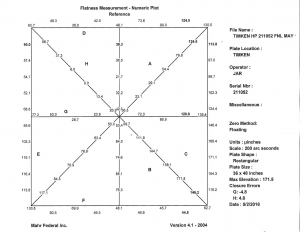
En korrekt test af overfladens fladhed
En korrekt test af overfladens planhed er en så vigtig del af denne artikel, at jeg burde have placeret den i begyndelsen. Som tidligere nævnt er Fed Spec. GGG-p-463c IKKE en kalibreringsmetode. Den fungerer som en vejledning til mange aspekter af metrologisk granit, hvis tiltænkte køber er enhver føderal regeringsmyndighed, og det inkluderer testmetoder og tolerancer eller kvaliteter. Hvis en entreprenør hævder, at de har overholdt Fed Specs, skal planhedsværdien bestemmes ved hjælp af Moody-metoden.
Moody var en fyr helt tilbage fra 50'erne, der udtænkte en matematisk metode til at bestemme den samlede fladhed og tage højde for retningen af de testede linjer, om de var tilstrækkeligt tæt på hinanden i samme plan. Intet har ændret sig. Allied Signal forsøgte at forbedre den matematiske metode, men konkluderede, at forskellene var så små, at det ikke var umagen værd.
Hvis en overfladepladeentreprenør bruger elektroniske niveauer eller laser, bruger han en computer til at hjælpe ham med beregningerne. Uden computerhjælp skal teknikeren, der bruger autokollimering, beregne aflæsningerne manuelt. I virkeligheden gør de det ikke. Det tager for lang tid og kan ærligt talt være for udfordrende. I en planhedstest ved hjælp af Moody-metoden tester teknikeren otte linjer i en Union Jack-konfiguration for rethed.
Moody-metoden
Moody-metoden er en matematisk metode til at bestemme, om de otte linjer er på samme plan. Ellers har du blot 8 rette linjer, der måske eller måske ikke er på eller i nærheden af samme plan. Ydermere, en entreprenør, der hævder at overholde Fed Spec, og bruger autokollimering, hanskalgenerere otte sider med data. En side for hver linje, der kontrolleres for at bevise hans testning, reparation eller begge dele. Ellers har entreprenøren ingen idé om, hvad den reelle planhedsværdi er.
Jeg er sikker på, at hvis du er en af dem, der får dine plader kalibreret af en håndværker ved hjælp af autokollimering, har du aldrig set de sider! Figur 3 er et eksempel påbare énen side med otte nødvendige sider for at beregne den samlede fladhed. En indikation af denne uvidenhed og ondskab er, hvis din rapport har pænt afrundede tal. For eksempel 200, 400, 650 osv. En korrekt beregnet værdi er et reelt tal. For eksempel 325,4 u In. Når entreprenøren bruger Moody-metoden til beregninger, og teknikeren beregner værdierne manuelt, bør du modtage otte sider med beregninger og et isometrisk plot. Det isometriske plot viser de varierende højder langs de forskellige linjer, og hvor meget afstand der adskiller de valgte skæringspunkter.
Figur 3(Det tager otte sider som denne at beregne planheden manuelt. Sørg for at spørge, hvorfor du ikke får dette, hvis din entreprenør bruger autokollimering!)
Figur 4
Dimensionsmålerteknikere bruger differentielle niveauer (Figur 4) som foretrukne apparater til at måle de små ændringer i vinkelretning fra målestation til station. Niveauerne har en opløsning ned til 0,1 buesekunder (5 u tommer ved brug af 4″ slæde), er ekstremt stabile, påvirkes ikke af vibrationer, målte afstande, luftstrømme, operatørtræthed, luftforurening eller andre problemer, der er forbundet med andre apparater. Tilføj computerhjælp, og opgaven bliver relativt hurtig, idet den genererer topografiske og isometriske plots, der beviser verifikationen og vigtigst af alt reparationen.
En korrekt repeterbarhedstest
Gentagen aflæsning eller repeterbarhed er den vigtigste test. Det udstyr, vi bruger til at udføre repeterbarhedstesten, er en gentagen aflæsningsanordning, en LVDT og en forstærker, der er nødvendig for aflæsninger med høj opløsning. Vi indstiller LVDT-forstærkeren til en minimumsopløsning på 10 u tommer eller 5 u tommer for plader med høj nøjagtighed.
Det er værdiløst at bruge en mekanisk indikator med en opløsning på kun 20 u tommer, hvis du forsøger at teste et repeterbarhedskrav på 35 u tommer. Indikatorer har en usikkerhed på 40 u tommer! Opsætningen af gentagen aflæsning efterligner en højdemåler/delkonfiguration.
Repeterbarhed ER IKKE det samme som generel fladhed (gennemsnitsplan). Jeg kan godt lide at tænke på repeterbarhed i granit set som en konsistent radiusmåling.
Figur 5
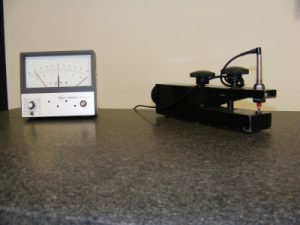
Hvis du tester repeterbarheden af en rund kugle, har du vist, at kuglens radius ikke har ændret sig. (Den ideelle profil for en korrekt repareret plade har en konveks kronet form.) Det er dog tydeligt, at kuglen ikke er flad. På en måde. På en ekstremt kort afstand er den flad. Da størstedelen af inspektionsarbejdet involverer en højdemåler meget tæt på emnet, bliver repeterbarhed den mest kritiske egenskab ved en granitplade. Det er vigtigere end den samlede fladhed, medmindre en bruger kontrollerer retheden af et langt emne.
Sørg for, at din entreprenør udfører en gentagen aflæsningstest. En plade kan have en gentagen aflæsning, der er betydeligt uden for tolerancen, men stadig bestå en planhedstest! Utroligt nok kan et laboratorium blive akkrediteret i test, der ikke inkluderer en gentagen aflæsningstest. Et laboratorium, der ikke kan reparere eller ikke er særlig godt til at reparere, foretrækker kun at udføre planhedstest. Planheden ændrer sig sjældent, medmindre du flytter pladen.
Gentagen aflæsningstest er den nemmeste at teste, men den sværeste at opnå ved lapning. Sørg for, at din entreprenør kan genoprette repeterbarheden uden at "skæve" overfladen eller efterlade bølger i overfladen.
Delta T-test
Denne test involverer måling af stenens FAKTISK temperatur på dens øvre og nedre overflade og beregning af forskellen, Delta T, til rapportering på certifikatet.
Det er vigtigt at vide, at den gennemsnitlige termiske udvidelseskoefficient i granit er 3,5 uIn/tomme/grad. Omgivelsestemperaturer og luftfugtigheds effekt på en granitplade er ubetydelig. En overfladeplade kan dog komme uden for tolerancen eller nogle gange forbedres, selvom den har en Delta T på 0,3-0,5 grader F. Det er nødvendigt at vide, om Delta T er inden for 0,12 grader F af, hvor differensen fra den sidste kalibrering er.
Det er også vigtigt at vide, at en plades arbejdsflade migrerer mod varme. Hvis den øverste temperatur er varmere end bunden, stiger den øverste overflade. Hvis bunden er varmere, hvilket er sjældent, synker den øverste overflade. Det er ikke nok for en kvalitetschef eller tekniker at vide, at pladen er flad og repeterbar på tidspunktet for kalibrering eller reparation, men hvad dens Delta T var på tidspunktet for den endelige kalibreringstest. I kritiske situationer kan en bruger ved selv at måle Delta T afgøre, om en plade er kommet uden for tolerancen udelukkende på grund af Delta T-variationer. Heldigvis tager granit mange timer eller endda dage at akklimatisere sig til et miljø. Mindre udsving i omgivelsestemperaturen i løbet af dagen vil ikke påvirke det. Af disse grunde rapporterer vi ikke omgivelseskalibreringstemperatur eller luftfugtighed, fordi effekterne er ubetydelige.
Granitpladeslid
Selvom granit er hårdere end stålplader, udvikler granit stadig lave pletter på overfladen. Gentagen bevægelse af dele og målere på overfladen af pladen er den største kilde til slid, især hvis det samme område er i konstant brug. Snavs og slibestøv, der forbliver på en plades overflade, fremskynder slidprocessen, når det kommer mellem dele eller målere og granitoverfladen. Når dele og målere flyttes hen over overfladen, er slibende støv normalt årsagen til yderligere slid. Jeg anbefaler kraftigt konstant rengøring for at reducere slid. Vi har set slid på plader forårsaget af daglige UPS-pakkeleverancer placeret oven på pladerne! Disse lokaliserede slidområder påvirker kalibreringsrepeterbarhedstestaflæsningerne. Undgå slid ved at rengøre regelmæssigt.
Rengøring af granitplader
For at holde pladen ren, skal du bruge en klæbeklud til at fjerne grus. Tryk bare meget let, så du ikke efterlader limrester. En velbrugt klæbeklud gør et fremragende stykke arbejde med at opsamle slibestøv mellem rengøringer. Arbejd ikke på samme sted. Flyt din opsætning rundt på pladen og fordel sliddet. Det er okay at bruge alkohol til at rengøre en plade, men vær opmærksom på, at det midlertidigt vil superkøle overfladen. Vand med en lille mængde sæbe er fremragende. De kommercielt tilgængelige rengøringsmidler, såsom Starrett's Cleaner, er også fremragende at bruge, men sørg for at få alle sæberester væk fra overfladen.
Reparation af granitplader
Det burde nu være tydeligt, hvor vigtigt det er at sikre sig, at din overfladepladeentreprenør udfører en kompetent kalibrering. De såkaldte "Clearing House"-laboratorier, der tilbyder "Gør det hele med ét opkald"-programmer, har sjældent en tekniker, der kan udføre reparationer. Selv hvis de tilbyder reparationer, har de ikke altid en tekniker, der har den nødvendige erfaring, når overfladepladen er væsentligt uden for tolerancen.
Hvis du får at vide, at en plade ikke kan repareres på grund af ekstrem slitage, så ring til os. Vi kan højst sandsynligt reparere den.
Vores teknikere har en læretid på et til halvandet år under en Master Surface Plate-tekniker. Vi definerer en Master Surface Plate-tekniker som en person, der har gennemført sin læretid og har over ti års yderligere erfaring inden for kalibrering og reparation af overfladeplader. Hos Dimensional Gauge har vi tre Master-teknikere ansat med over 60 års erfaring tilsammen. En af vores Master-teknikere er altid tilgængelig for støtte og vejledning, når der opstår vanskelige situationer. Alle vores teknikere har erfaring med kalibrering af overfladeplader i alle størrelser, fra små til meget store, varierende miljøforhold, forskellige brancher og med større slidproblemer.
Fed-specifikationer har et specifikt finishkrav på 16 til 64 gennemsnitlig aritmetisk ruhed (AA). Vi foretrækker en finish i området 30-35 AA. Der er lige præcis nok ruhed til at sikre, at dele og målere bevæger sig jævnt og ikke klæber eller vrider sig til overfladepladen.
Når vi reparerer, inspicerer vi pladen for korrekt montering og vater. Vi bruger en tørlapningsmetode, men i tilfælde af ekstrem slitage, der kræver betydelig fjernelse af granit, vådlapser vi. Vores teknikere rydder op efter sig selv. De er grundige, hurtige og præcise. Det er vigtigt, fordi omkostningerne ved service af granitplader inkluderer din nedetid og tabt produktion. En kompetent reparation er af afgørende betydning, og du bør aldrig vælge en entreprenør på pris eller bekvemmelighed. Noget kalibreringsarbejde kræver højt uddannede personer. Det har vi.
Endelige kalibreringsrapporter
For hver reparation og kalibrering af overfladeplader leverer vi detaljerede professionelle rapporter. Vores rapporter indeholder en betydelig mængde af både kritiske og relevante oplysninger. Fed Spec. kræver de fleste af de oplysninger, vi har leveret. Med undtagelse af dem, der er indeholdt i andre kvalitetsstandarder såsom ISO/IEC-17025, er minimumskravene til Fed Spec. for rapporter:
- Størrelse i fod (X' x X')
- Farve
- Stil (Henviser til afsatser uden klemme eller to eller fire afsatser)
- Estimeret elasticitetsmodul
- Gennemsnitlig plantolerance (bestemt af karakter/størrelse)
- Gentag aflæsningstolerance (bestemmes af diagonallængde i tommer)
- Middelplan som fundet
- Middelplan til venstre
- Gentag aflæsningen som fundet
- Gentag læsningen som til venstre
- Delta T (Temperaturforskel mellem top- og bundflader)
Hvis teknikeren har brug for at udføre lapning eller reparationsarbejde på overfladepladen, ledsages kalibreringscertifikatet af et topografisk eller isometrisk plot for at bevise en gyldig reparation.
Et ord om ISO/IEC-17025-akkrediteringer og de laboratorier, der har dem
Bare fordi et laboratorium er akkrediteret inden for kalibrering af overfladeplader, betyder det ikke nødvendigvis, at de ved, hvad de laver, og slet ikke at de gør det korrekt! Det betyder heller ikke nødvendigvis, at laboratoriet kan reparere. Akkrediteringsorganerne skelner ikke mellem verifikation og kalibrering (reparation).Aog jeg kender til en, måske2akkrediteringsorganer, der vilLbindeAet bånd om min hund, hvis jeg betalte dem penge nok! Det er en trist kendsgerning. Jeg har set laboratorier blive akkrediteret ved kun at udføre én af de tre krævede tests. Desuden har jeg set laboratorier blive akkrediteret med urealistiske usikkerheder og blive akkrediteret uden bevis eller demonstration af, hvordan de beregnede værdierne. Det er alt sammen uheldigt.
Summation
Man kan ikke undervurdere præcisionsgranitpladers rolle. Den flade reference, som granitplader giver, er fundamentet for alle andre målinger.
Du kan bruge de mest moderne, mest præcise og mest alsidige måleinstrumenter. Det er dog svært at fastslå præcise målinger, hvis referenceoverfladen ikke er plan. Engang sagde en potentiel kunde til mig: "Det er bare sten!" Mit svar var: "Okay, du har ret, og du kan bestemt ikke retfærdiggøre at få eksperter til at vedligeholde dine overfladeplader."
Pris er aldrig en god grund til at vælge entreprenører inden for overfladeplader. Indkøbere, revisorer og et foruroligende antal kvalitetsingeniører forstår ikke altid, at recertificering af granitplader ikke er som at recertificere et mikrometer, en skydelære eller et DMM.
Nogle instrumenter kræver ekspertise, ikke en lav pris. Når det er sagt, er vores priser meget rimelige. Især fordi vi har tillid til, at vi udfører arbejdet korrekt. Vi går langt ud over ISO-17025 og føderale specifikationskrav i merværdi.
Overfladeplader er grundlaget for mange dimensionelle målinger, og korrekt pleje af din overfladeplade er nødvendig for at sikre målenøjagtighed.
Granit er det mest populære materiale til overfladeplader på grund af dets ideelle fysiske egenskaber, såsom overfladehårdhed og lav følsomhed over for temperaturudsving. Ved fortsat brug kan overfladeplader dog opleve slid.
Fladhed og repeterbarhed er begge kritiske aspekter for at afgøre, om en plade giver en præcis overflade til at opnå nøjagtige målinger. Tolerancerne for begge aspekter er defineret i henhold til den føderale specifikation GGG-P-463C, DIN, GB, JJS... Fladhed er målingen af afstanden mellem det højeste punkt (tagplanet) og det laveste punkt (basisplanet) på pladen. Repeterbarhed bestemmer, om en måling taget fra ét område kan gentages på tværs af hele pladen inden for den angivne tolerance. Dette sikrer, at der ikke er nogen toppe eller dale i pladen. Hvis aflæsningerne ikke er inden for de angivne retningslinjer, kan det være nødvendigt med en ny overfladebehandling for at bringe målingerne tilbage til specifikationen.
Rutinemæssig kalibrering af overfladeplader er nødvendig for at sikre planhed og repeterbarhed over tid. Præcisionsmålingsgruppen hos Cross er ISO 17025-akkrediteret til kalibrering af overfladepladers planhed og repeterbarhed. Vi anvender Mahr Surface Plate Certification System, der omfatter:
- Humør- og profilanalyse,
- Isometriske eller numeriske plots,
- Gennemsnit af flere løb, og
- Automatisk gradering i henhold til branchestandarder.
Mahr Computer Assisted Model bestemmer enhver vinkel- eller lineær afvigelse fra absolut niveau og er ideelt egnet til meget præcis profilering af overfladeplader.
Intervallerne mellem kalibreringer vil variere afhængigt af brugshyppigheden, de miljøforhold, hvor pladen er placeret, og din virksomheds specifikke kvalitetskrav. Korrekt vedligeholdelse af din overfladeplade kan muliggøre længere intervaller mellem hver kalibrering, hjælpe dig med at undgå de ekstra omkostninger ved genbelægning og vigtigst af alt sikrer, at de målinger, du får på pladen, er så nøjagtige som muligt. Selvom overfladeplader virker robuste, er de præcisionsinstrumenter og bør behandles som sådan. Her er nogle ting, du skal overveje vedrørende pleje af dine overfladeplader:
- Hold tallerkenen ren, og dæk den om muligt til, når den ikke er i brug
- Intet andet må placeres på pladen end måleinstrumenter eller andre dele, der skal måles.
- Brug ikke det samme sted på tallerkenen hver gang.
- Hvis det er muligt, drej pladen med jævne mellemrum.
- Respekter belastningsgrænsen for din tallerken
Præcisionsgranitbase kan forbedre maskinværktøjets ydeevne
Kravene inden for maskinteknik generelt og inden for maskinværktøjskonstruktion i særdeleshed stiger konstant. At opnå maksimal præcision og ydelsesværdier uden at øge omkostningerne er en konstant udfordring for at være konkurrencedygtig. Maskinlejet er en afgørende faktor her. Derfor er flere og flere maskinværktøjsproducenter afhængige af granit. På grund af dets fysiske parametre tilbyder det klare fordele, der ikke kan opnås med stål eller polymerbeton.
Granit er en såkaldt vulkansk dybbjergart og har en meget tæt og homogen struktur med en ekstremt lav udvidelseskoefficient, lav varmeledningsevne og høj vibrationsdæmpning.
Nedenfor vil du opdage, hvorfor den gængse opfattelse af, at granit primært kun er egnet som maskinbase til avancerede koordinatmålemaskiner, for længst er forældet, og hvorfor dette naturlige materiale som maskinbase er et meget fordelagtigt alternativ til stål eller støbejern, selv til højpræcisionsværktøjsmaskiner.
Vi kan fremstille granitkomponenter til dynamisk bevægelse, granitkomponenter til lineære motorer, granitkomponenter til NDT, granitkomponenter til røntgen, granitkomponenter til CMM, granitkomponenter til CNC, granitpræcision til laser, granitkomponenter til luftfart, granitkomponenter til præcisionsborde...
Høj merværdi uden ekstra omkostninger
Den stigende brug af granit i maskinteknik skyldes ikke så meget den massive stigning i stålprisen. Det skyldes snarere, at den merværdi, der opnås med et maskinleje af granit, er mulig med meget få eller ingen ekstra omkostninger. Dette bevises af prissammenligninger fra kendte maskinproducenter i Tyskland og Europa.
Den betydelige gevinst i termodynamisk stabilitet, vibrationsdæmpning og langsigtet præcision, som granit muliggør, kan ikke opnås med et støbejerns- eller stålleje, eller kun til relativt høje omkostninger. For eksempel kan termiske fejl tegne sig for op til 75% af en maskines samlede fejl, hvor kompensation ofte forsøges med software – med moderat succes. På grund af sin lave varmeledningsevne er granit det bedre grundlag for langsigtet præcision.
Med en tolerance på 1 μm opfylder granit nemt planhedskravene i henhold til DIN 876 for nøjagtighedsgraden 00. Med en værdi på 6 på hårdhedsskalaen 1 til 10 er den ekstremt hård, og med sin specifikke vægt på 2,8 g/cm³ når den næsten værdien af aluminium. Dette resulterer også i yderligere fordele såsom højere tilspændingshastigheder, højere akseaccelerationer og en forlængelse af værktøjslevetiden for skæremaskiner. Skiftet fra et støbebord til et granit-maskinbord flytter således maskinværktøjet op i high-end-klassen med hensyn til præcision og ydeevne – uden ekstra omkostninger.
Granits forbedrede økologiske fodaftryk
I modsætning til materialer som stål eller støbejern behøver natursten ikke at blive produceret med et stort energiforbrug og ved hjælp af tilsætningsstoffer. Der kræves kun relativt små mængder energi til brydning og overfladebehandling. Dette resulterer i et bedre økologisk fodaftryk, som selv ved slutningen af en maskines levetid overgår stålets som materiale. Granitlejet kan danne grundlag for en ny maskine eller bruges til helt andre formål, såsom neddeling til vejbygning.
Der er heller ingen mangel på ressourcer til granit. Det er en dyb klippe dannet af magma i jordskorpen. Den er 'modnet' i millioner af år og er tilgængelig i meget store mængder som en naturressource på næsten alle kontinenter, inklusive hele Europa.
Konklusion: De mange påviselige fordele ved granit sammenlignet med stål eller støbejern retfærdiggør den stigende villighed hos maskiningeniører til at bruge dette naturlige materiale som fundament for højpræcisions- og højtydende værktøjsmaskiner. Detaljeret information om granitegenskaber, som er fordelagtige for værktøjsmaskiner og maskinteknik, kan findes i denne yderligere artikel.
En gentagen måling er en måling af lokale planhedsområder. Specifikationen for gentagen måling angiver, at en måling foretaget et hvilket som helst sted på overfladen af en plade vil gentages inden for den angivne tolerance. Ved at kontrollere den lokale planhed til at være strammere end den samlede planhed garanteres en gradvis ændring i overfladens planhedsprofil, hvorved lokale fejl minimeres.
De fleste producenter, inklusive importerede mærker, overholder den føderale specifikation for samlede planhedstolerancer, men mange overser gentagelsesmålingerne. Mange af de lavpris- eller budgetplader, der er tilgængelige på markedet i dag, garanterer ikke gentagelsesmålinger. En producent, der ikke garanterer gentagelsesmålinger, producerer IKKE plader, der opfylder kravene i ASME B89.3.7-2013 eller den føderale specifikation GGG-P-463c eller DIN 876, GB, JJS...
Begge er afgørende for at sikre en præcis overflade til nøjagtige målinger. Planhedsspecifikation alene er ikke tilstrækkelig til at garantere målenøjagtighed. Tag som eksempel en 36 X 48 inspektionsgrad A overfladeplade, der KUN opfylder planhedsspecifikationen på 0,000300". Hvis det emne, der kontrolleres, overlapper flere toppe, og den anvendte måler er på et lavt punkt, kan målefejlen være den fulde tolerance i ét område, 0,00300". Faktisk kan den være meget højere, hvis måleren hviler på en skråning.
Fejl på 0,000600"-0,000800" er mulige, afhængigt af hældningens omfang og armlængden på den anvendte måler. Hvis denne plade havde en specifikation for gentagen måling på 0,000050"FIR, ville målefejlen være mindre end 0,000050", uanset hvor på pladen målingen foretages. Et andet problem, der normalt opstår, når en utrænet tekniker forsøger at give en plade et nyt overfladebehandlingsresultat på stedet, er brugen af gentagne målinger alene til at certificere en plade.
Instrumenterne, der bruges til at verificere repeterbarhed, er IKKE designet til at kontrollere den samlede planhed. Når de er indstillet til nul på en perfekt buet overflade, vil de fortsætte med at vise nul, uanset om overfladen er perfekt flad, perfekt konkav eller konveks (1/2")! De verificerer blot overfladens ensartethed, ikke planheden. Kun en plade, der opfylder både planhedsspecifikationen OG gentagelsesmålingsspecifikationen, opfylder virkelig kravene i ASME B89.3.7-2013 eller Federal Specification GGG-P-463c.
Ask us about or flatness specification and repeat measurement promise by calling +86 19969991659 or emailing INFO@ZHHIMG.COM
Ja, men de kan kun garanteres for en specifik lodret temperaturgradient. Virkningerne af termisk udvidelse på pladen kan nemt forårsage en ændring i nøjagtigheden, der er større end tolerancen, hvis der er en ændring i gradienten. I nogle tilfælde, hvis tolerancen er snæver nok, kan varmen, der absorberes fra loftsbelysning, forårsage en tilstrækkelig gradientændring over flere timer.
Granit har en termisk udvidelseskoefficient på cirka 0,0000035 tommer pr. tomme pr. 1°F. Som et eksempel: En overfladeplade på 36" x 48" x 8" har en nøjagtighed på 0,000075" (1/2 af klasse AA) ved en hældning på 0°F, hvor toppen og bunden har samme temperatur. Hvis toppen af pladen varmes op til et punkt, hvor den er 1°F varmere end bunden, vil nøjagtigheden ændre sig til 0,000275" konveks! Derfor bør bestilling af en plade med en tolerance, der er strammere end laboratorieklasse AA, kun overvejes, hvis der er tilstrækkelig klimakontrol.
En overfladeplade bør understøttes på 3 punkter, ideelt placeret 20% af længden ind fra pladens ender. To understøtninger bør placeres 20% af bredden ind fra de lange sider, og den resterende understøtning bør være centreret. Kun 3 punkter kan hvile solidt på andet end en præcisionsoverflade.
Pladen skal understøttes på disse punkter under produktionen, og den skal kun understøttes på disse tre punkter under brug. Forsøg på at understøtte pladen på mere end tre punkter vil medføre, at pladen modtager sin støtte fra forskellige kombinationer af tre punkter, som ikke vil være de samme 3 punkter, som den blev understøttet på under produktionen. Dette vil medføre fejl, da pladen bøjer sig for at tilpasse sig den nye støtteanordning. Alle zhhimg-stålstativer har støttebjælker, der er designet til at flugte med de korrekte støttepunkter.
Hvis pladen er korrekt understøttet, er præcis nivellering kun nødvendig, hvis din anvendelse kræver det. Nivellering er ikke nødvendig for at opretholde nøjagtigheden af en korrekt understøttet plade.
Hvorfor vælge granit tilMaskinbaserogMålekomponenter?
Svaret er 'ja' til næsten alle anvendelser. Fordelene ved granit inkluderer: Ingen rust eller korrosion, næsten immun over for vridning, ingen kompenserende bump ved hak, længere levetid, mere jævn funktion, større præcision, stort set ikke-magnetisk, lav termisk udvidelseskoefficient og lave vedligeholdelsesomkostninger.
Granit er en type magmatisk bjergart, der udvindes for sin ekstreme styrke, densitet, holdbarhed og korrosionsbestandighed. Men granit er også meget alsidig – den er ikke kun til firkanter og rektangler! Faktisk arbejder Starrett Tru-Stone regelmæssigt med granitkomponenter, der er konstrueret i former, vinkler og kurver i alle variationer – med fremragende resultater.
Takket være vores avancerede bearbejdning kan skæreflader blive exceptionelt plane. Disse egenskaber gør granit til det ideelle materiale til at skabe maskinbaser og målekomponenter i specialstørrelse og -design. Granit er:
maskinbearbejdelig
præcis flad når den er skåret og færdiggjort
rustbestandig
holdbar
langvarig
Granitkomponenter er også nemme at rengøre. Når du laver brugerdefinerede designs, skal du sørge for at vælge granit på grund af dets overlegne fordele.
STANDARDER/ ANVENDELSER MED HØJ SLIDTAGE
Den granit, som ZhongHui bruger til vores standard overfladepladeprodukter, har et højt kvartsindhold, hvilket giver større modstandsdygtighed over for slid og skader. Vores farver Superior Black og Crystal Pink har lave vandabsorptionshastigheder, hvilket minimerer risikoen for, at dine præcisionsmålere ruster, mens de monteres på pladerne. De granitfarver, som ZhongHui tilbyder, resulterer i mindre genskin, hvilket betyder mindre øjenbelastning for personer, der bruger pladerne. Vi har valgt vores granittyper under hensyntagen til termisk udvidelse for at holde dette aspekt minimalt.
BRUGERDEFINEREDE APPLIKATIONER
Når din applikation kræver en plade med brugerdefinerede former, gevindindsatser, slidser eller anden bearbejdning, bør du vælge et materiale som sort diabas. Dette naturlige materiale tilbyder overlegen stivhed, fremragende vibrationsdæmpning og forbedret bearbejdelighed.
Ja, hvis de ikke er alt for slidte. Vores fabriksindstillinger og udstyr giver de optimale betingelser for korrekt pladekalibrering og efterbearbejdning om nødvendigt. Generelt kan en plade, hvis den er inden for 0,025 cm af den krævede tolerance, renoveres på stedet. Hvis en plade er slidt til det punkt, hvor den er mere end 0,025 cm uden for tolerancen, eller hvis den er stærkt grubet eller hakket, skal den sendes til fabrikken til slibning, inden den renoveres.
Der skal udvises stor omhu ved valg af en tekniker til kalibrering og overfladebehandling på stedet. Vi opfordrer dig til at være forsigtig med valget af din kalibreringstjeneste. Bed om akkreditering, og verificer, at det udstyr, som teknikeren vil bruge, har en kalibrering, der kan spores af en national inspektionsinstitution. Det tager mange år at lære, hvordan man korrekt sliber præcisionsgranit.
ZhongHui tilbyder hurtig ekspeditionstid på kalibreringer udført på vores fabrik. Send dine plader ind til kalibrering, hvis det er muligt. Din kvalitet og dit omdømme afhænger af nøjagtigheden af dine måleinstrumenter, inklusive overfladeplader!
Vores sorte overfladeplader har en betydeligt højere densitet og er op til tre gange så stive. Derfor behøver en plade lavet af sort ikke at være lige så tyk som en granitplade af samme størrelse for at have samme eller større modstand mod nedbøjning. Reduceret tykkelse betyder mindre vægt og lavere forsendelsesomkostninger.
Vær opmærksom på andre, der bruger sort granit af lavere kvalitet i samme tykkelse. Som nævnt ovenfor varierer egenskaberne ved granit, som f.eks. træ eller metal, afhængigt af materiale og farve, og er ikke en nøjagtig indikator for stivhed, hårdhed eller slidstyrke. Faktisk er mange typer sort granit og diabas meget bløde og ikke egnede til overfladepladeapplikationer.
Nej. Det specialiserede udstyr og den træning, der er nødvendig for at omarbejde disse emner, kræver, at de returneres til fabrikken til kalibrering og omarbejde.
Ja. Keramik og granit har lignende egenskaber, og de metoder, der bruges til at kalibrere og slibe granit, kan også bruges med keramiske genstande. Keramik er vanskeligere at slibe end granit, hvilket resulterer i en højere pris.
Ja, forudsat at indsatserne er forsænket under overfladen. Hvis stålindsatserne er i niveau med eller over overfladeplanet, skal de punktvis slibes nedad, før pladen kan lappes. Om nødvendigt kan vi tilbyde denne service.
Ja. Stålindsatser med det ønskede gevind (engelsk eller metrisk) kan epoxylimes ind i pladen på de ønskede steder. ZhongHui bruger CNC-maskiner til at opnå de strammeste indsatsplaceringer inden for +/- 0,005". For mindre kritiske indsatser er vores placeringstolerance for gevindindsatser ±,060". Andre muligheder inkluderer stål-T-barer og svalehalespor, der er fræset direkte ind i granitten.
Indsatser, der er korrekt limet med højstyrkeepoxy og godt håndværk, vil modstå en stor mængde vridnings- og forskydningskræfter. I en nylig test, hvor et uafhængigt testlaboratorium brugte 3/8"-16 gevindindsatser, målte den kraft, der kræves for at trække en epoxybundet indsats ud af en overfladeplade. Ti plader blev testet. Ud af disse ti brækkede granitten først i ni tilfælde. Den gennemsnitlige belastning ved brudpunktet var 10.020 lbs. for grå granit og 12.310 lbs. for sort. I det eneste tilfælde, hvor en indsats blev trukket fri af pladen, var belastningen ved brudpunktet 12.990 lbs.! Hvis et emne danner en bro over indsatsen, og der påføres et ekstremt drejningsmoment, er det muligt at generere nok kraft til at brække granitten. Delvist af denne grund giver ZhongHui retningslinjer for det maksimale sikre drejningsmoment, der kan påføres de epoxybundne indsatser: https://www.zhhimg.com/standard-thread-inserts-product/
Ja, men kun på vores fabrik. På vores fabrik kan vi restaurere næsten enhver plade til "som ny" stand, normalt for mindre end halvdelen af prisen for at udskifte den. Beskadigede kanter kan lappes kosmetisk, dybe riller, hak og huller kan slibes ud, og de fastgjorte understøtninger kan udskiftes. Derudover kan vi modificere din plade for at øge dens alsidighed ved at tilføje massive eller gevindskårne stålindsatser og skære slidser eller klemmelæber efter dine specifikationer.
Hvorfor vælge granit?
Granit er en type magmatisk bjergart, der blev dannet i Jorden for millioner af år siden. Magmatisk bjergart indeholdt mange mineraler såsom kvarts, der er ekstremt hård og slidstærk. Ud over hårdhed og slidstyrke har granit cirka halvdelen af udvidelseskoefficienten som støbejern. Da dens volumetriske vægt er cirka en tredjedel af støbejerns, er granit lettere at manøvrere.
Til maskinbaser og målekomponenter er sort granit den mest anvendte farve. Sort granit har en højere procentdel af kvarts end andre farver og er derfor den mest slidstærke.
Granit er omkostningseffektivt, og snitfladerne kan være exceptionelt plane. Ikke alene kan det håndslebes for at opnå ekstrem nøjagtighed, men efterbehandling kan udføres uden at flytte pladen eller bordet væk fra stedet. Det er udelukkende en manuel slebningsoperation og koster generelt meget mindre end efterbehandling af et støbejernsalternativ.
Disse egenskaber gør granit til det ideelle materiale til at skabe maskinbaser og målekomponenter i specialstørrelse og -design, såsomgranit overfladeplade.
ZhongHui producerer skræddersyede granitprodukter, der er skabt til at understøtte specifikke målekrav. Disse skræddersyede varer varierer fralige kanter totre firkanterPå grund af granitens alsidige natur,komponenterkan produceres i enhver ønsket størrelse; de er slidstærke og holdbare.
Fordele ved granitoverfladeplader
Vigtigheden af at måle på en jævn overflade blev fastslået af den britiske opfinder Henry Maudsley i 1800-tallet. Som maskinværktøjsinnovator fastslog han, at ensartet produktion af dele krævede en solid overflade for at opnå pålidelige målinger.
Den industrielle revolution skabte en efterspørgsel efter måleflader, så ingeniørvirksomheden Crown Windley skabte produktionsstandarder. Standarderne for overfladeplader blev først fastsat af Crown i 1904 ved hjælp af metal. Efterhånden som efterspørgslen og prisen på metal steg, blev alternative materialer til målefladen undersøgt.
I Amerika fastslog monumentskaberen Wallace Herman, at sort granit var et fremragende alternativ til metal som overfladeplade. Da granit ikke er magnetisk og ikke ruster, blev det hurtigt den foretrukne måleflade.
En granitoverfladeplade er en essentiel investering for laboratorier og testfaciliteter. En granitoverfladeplade på 600 x 600 mm kan monteres på et støttestativ. Stativerne giver en arbejdshøjde på 34” (0,86 m) med fem justerbare punkter til nivellering.
For pålidelige og ensartede måleresultater er en granitoverfladeplade afgørende. Da overfladen er en glat og stabil plan, gør den det muligt at manipulere instrumenter omhyggeligt.
De vigtigste fordele ved granitoverflader er:
• Ikke-reflekterende
• Modstandsdygtig over for kemikalier og korrosion
• Lav udvidelseskoefficient sammenlignet med vognjern, så den påvirkes mindre af temperaturændringer
• Naturligt stiv og slidstærk
• Overfladen forbliver ridset og upåvirket
• Vil ikke ruste
• Ikke-magnetisk
• Nem at rengøre og vedligeholde
• Kalibrering og overfladebehandling kan udføres på stedet
• Velegnet til boring til gevindstøtteindsatser
• Høj vibrationsdæmpning
For mange værksteder, inspektionsrum og laboratorier anvendes præcisionsplader af granit som grundlag for nøjagtig måling. Fordi enhver lineær måling afhænger af en nøjagtig referenceoverflade, hvorfra de endelige dimensioner tages, giver overfladeplader det bedste referenceplan til arbejdsinspektion og layout før bearbejdning. De er også ideelle grundlag for at foretage højdemålinger og måle overflader. Ydermere gør en høj grad af fladhed, stabilitet, generel kvalitet og udførelse dem til et godt valg til montering af sofistikerede mekaniske, elektroniske og optiske målesystemer. For alle disse måleprocesser er det bydende nødvendigt at holde overfladepladerne kalibrerede.
Gentag målinger og fladhed
Både planhed og gentagne målinger er afgørende for at sikre en præcis overflade. Planhed kan betragtes som alle punkter på overfladen, der er indeholdt i to parallelle planer, basisplanet og tagplanet. Målingen af afstanden mellem planerne er overfladens samlede planhed. Denne planhedmåling har normalt en tolerance og kan inkludere en karakterbetegnelse.
Planhedstolerancerne for tre standardkvaliteter er defineret i den føderale specifikation som bestemt af følgende formel:
Laboratoriekvalitet AA = (40 + diagonal² / 25) x 0,000001 tomme (ensidig)
Inspektionsgrad A = Laboratoriegrad AA x 2
Værktøjsrumsklasse B = Laboratorieklasse AA x 4
Ud over planhed skal repeterbarhed sikres. En gentagen måling er en måling af lokale planhedsområder. Det er en måling, der tages et sted på overfladen af en plade, og som vil gentage sig inden for den angivne tolerance. Ved at kontrollere den lokale planhed til en snævrere tolerance end den samlede planhed garanteres en gradvis ændring i overfladens planhedsprofil, hvorved lokale fejl minimeres.
For at sikre, at en overfladeplade opfylder både specifikationerne for planhed og gentagne målinger, bør producenter af granitoverfladeplader bruge den føderale specifikation GGG-P-463c som grundlag for deres specifikationer. Denne standard omhandler nøjagtighed af gentagne målinger, materialeegenskaber for granitoverfladeplader, overfladefinish, placering af støttepunkter, stivhed, acceptable inspektionsmetoder og installation af gevindindsatser.
Før en overfladeplade er slidt ud over specifikationen for generel planhed, vil den vise slidte eller bølgede stifter. Månedlig inspektion for gentagne målefejl ved hjælp af en gentagende aflæsningsmåler vil identificere slidpunkter. En gentagende aflæsningsmåler er et højpræcisionsinstrument, der registrerer lokale fejl og kan vises på en elektronisk forstærker med høj forstørrelse.
Kontrol af pladens nøjagtighed
Ved at følge et par enkle retningslinjer bør en investering i en granitoverfladeplade holde i mange år. Afhængigt af pladens brug, værkstedsmiljøet og den nødvendige nøjagtighed varierer hyppigheden af kontrol af overfladepladens nøjagtighed. En generel tommelfingerregel er, at en ny plade skal gennemgå en fuld rekalibrering inden for et år efter købet. Hvis pladen bruges ofte, anbefales det at forkorte dette interval til seks måneder.
Før en overfladeplade er slidt ud over specifikationen for generel planhed, vil den vise slidte eller bølgede stifter. Månedlig inspektion for gentagne målefejl ved hjælp af en gentagende aflæsningsmåler vil identificere slidpunkter. En gentagende aflæsningsmåler er et højpræcisionsinstrument, der registrerer lokale fejl og kan vises på en elektronisk forstærker med høj forstørrelse.
Et effektivt inspektionsprogram bør omfatte regelmæssige kontroller med en autokollimator, der giver faktisk kalibrering af den samlede planhed, som kan spores tilbage til National Institute of Standards and Technology (NIST). Omfattende kalibrering foretaget af producenten eller et uafhængigt firma er nødvendig fra tid til anden.
Variationer mellem kalibreringer
I nogle tilfælde er der variationer mellem kalibreringer af overfladeplader. Nogle gange kan faktorer som overfladeændringer som følge af slid, forkert brug af inspektionsudstyr eller brug af ikke-kalibreret udstyr forklare disse variationer. De to mest almindelige faktorer er dog temperatur og understøtning.
En af de vigtigste variabler er temperaturen. For eksempel kan overfladen være blevet vasket med en varm eller kold opløsning før kalibrering og ikke have fået tilstrækkelig tid til at normalisere sig. Andre årsager til temperaturændringer inkluderer træk af kold eller varm luft, direkte sollys, loftsbelysning eller andre kilder til strålevarme på pladens overflade.
Der kan også være variationer i den vertikale temperaturgradient mellem vinter og sommer. I nogle tilfælde får pladen ikke tilstrækkelig tid til at normalisere sig efter forsendelse. Det er en god idé at registrere den vertikale gradienttemperatur, når kalibreringen udføres.
En anden almindelig årsag til kalibreringsvariationer er en plade, der er forkert understøttet. En overfladeplade bør understøttes på tre punkter, ideelt set placeret 20% af længden ind fra pladens ender. To understøtninger bør placeres 20% af bredden ind fra de lange sider, og den resterende understøtning bør være centreret.
Kun tre punkter kan hvile solidt på andet end en præcisionsoverflade. Forsøg på at understøtte pladen på mere end tre punkter vil medføre, at pladen modtager sin støtte fra forskellige kombinationer af tre punkter, som ikke vil være de samme tre punkter, som den blev understøttet på under produktionen. Dette vil medføre fejl, da pladen bøjer sig for at tilpasse sig den nye støtteanordning. Overvej at bruge stålstativer med støttebjælker, der er designet til at flugte med de korrekte støttepunkter. Stativer til dette formål er generelt tilgængelige fra producenten af overfladepladen.
Hvis pladen er korrekt understøttet, er præcis nivellering kun nødvendig, hvis en anvendelse specificerer det. Nivellering er ikke nødvendig for at opretholde nøjagtigheden af en korrekt understøttet plade.
Det er vigtigt at holde pladen ren. Luftbårent slibestøv er normalt den største kilde til slid på en plade, da det har tendens til at sætte sig fast i emner og måleinstrumenternes kontaktflader. Dæk pladerne til for at beskytte dem mod støv og skader. Slidtiden kan forlænges ved at dække pladen til, når den ikke er i brug.
Forlæng pladens levetid
Ved at følge et par retningslinjer vil du reducere slid på en granitoverflade og i sidste ende forlænge dens levetid.
For det første er det vigtigt at holde pladen ren. Luftbårent slibestøv er normalt den største kilde til slid på en plade, da det har tendens til at sætte sig fast i emner og måleinstrumenternes kontaktflader.
Det er også vigtigt at dække pladerne for at beskytte dem mod støv og skader. Levetiden kan forlænges ved at dække pladen til, når den ikke er i brug.
Drej pladen med jævne mellemrum, så et enkelt område ikke udsættes for overdreven brug. Det anbefales også at udskifte stålkontaktpuder på måleudstyr med hårdmetalkontaktpuder.
Undgå at sætte mad eller sodavand på tallerkenen. Mange sodavand indeholder enten kulsyre eller fosforsyre, som kan opløse de blødere mineraler og efterlade små huller i overfladen.
Hvor man skal tilbagefalde
Når en granitplade skal slibes, bør man overveje, om denne service skal udføres på stedet eller på et kalibreringsanlæg. Det er altid at foretrække at få pladen slibet på fabrikken eller et dedikeret anlæg. Hvis pladen dog ikke er for slidt, generelt inden for 0,001 tommer af den krævede tolerance, kan den slibes på stedet. Hvis en plade er slidt til et punkt, hvor den er mere end 0,001 tommer uden for tolerancen, eller hvis den er stærkt grubet eller hakket, skal den sendes til fabrikken til slibning inden slibes igen.
Et kalibreringsanlæg har det udstyr og de fabriksindstillinger, der giver de optimale betingelser for korrekt pladekalibrering og om nødvendigt efterbearbejdning.
Der skal udvises stor omhu ved valg af en tekniker til kalibrering og overfladebehandling på stedet. Bed om akkreditering, og verificer, at det udstyr, som teknikeren vil bruge, har en NIST-sporbar kalibrering. Erfaring er også en vigtig faktor, da det tager mange år at lære, hvordan man korrekt sliber præcisionsgranit.
Kritiske målinger starter med en præcisions granitoverfladeplade som basislinje. Ved at sikre en pålidelig reference ved hjælp af en korrekt kalibreret overfladeplade har producenterne et af de vigtigste værktøjer til pålidelige målinger og dele af bedre kvalitet.
Tjekliste for kalibreringsvariationer
- Overfladen blev vasket med en varm eller kold opløsning før kalibrering og fik ikke tilstrækkelig tid til at normalisere sig.
- Pladen er ikke korrekt understøttet.
- Temperaturændring.
- Udkast.
- Direkte sollys eller anden strålevarme på pladens overflade. Sørg for, at loftsbelysning ikke opvarmer overfladen.
- Variationer i den vertikale temperaturgradient mellem vinter og sommer. Hvis det overhovedet er muligt, skal den vertikale gradienttemperatur kendes på det tidspunkt, hvor kalibreringen udføres.
- Pladen har ikke haft tilstrækkelig tid til at normalisere sig efter forsendelse.
- Forkert brug af inspektionsudstyr eller brug af ukalibreret udstyr.
- Overfladeændring som følge af slid.
Tekniske tips
Fordi hver lineær måling afhænger af en nøjagtig referenceoverflade, hvorfra de endelige dimensioner tages, giver overfladeplader det bedste referenceplan til arbejdsinspektion og layout før bearbejdning.
Ved at kontrollere den lokale planhed til en snævrere tolerance end den samlede planhed, garanteres en gradvis ændring i overfladens planhedsprofil, hvorved lokale fejl minimeres.